What does "I love you" mean? In most relationships, "I love you" means "I care about you deeply, I choose you, and I want good things for you even when it costs me something." The exact weight depends on timing, tone and actions. The same three words can be a spark, a promise or a quiet daily habit.
This guide is for anyone who has heard those words and wondered what was behind them, or who is holding them in and trying to decide when to say them. You'll find what the phrase tends to mean at each stage of a relationship, how to tell when someone really means it, what to say back when you aren't ready, and plenty of scripts you can borrow.
- "I love you" usually carries three messages at once: a feeling of deep care, a choice to stay close, and a wish for the other person's happiness.
- The meaning shifts with time, so the first "I love you" in a new relationship often signals hope, while the thousandth one in a long marriage signals loyalty.
- Actions are the best evidence that the words are sincere, especially steady kindness, keeping promises, and showing up during hard weeks.
- You never owe anyone an "I love you" back, and a warm, honest reply that you aren't there yet is kinder than saying words you don't feel.
- Couples feel love most clearly when it arrives in the form each partner understands best, whether that's words, time, touch, help or thoughtful gifts.
💌 Pick a message from this list
Tap for a message from this page, then copy it into a text or card.
What does "I love you" really mean?
At its core, "I love you" is a statement of attachment plus intention: "You matter to me, and I plan to keep acting like it." It is part feeling and part commitment.
People sometimes treat love as only an emotion, a rush that shows up and then fades. But when most adults say these words to a partner, they mean something sturdier. They're describing a bond they want to protect. A helpful way to think about the phrase is to split it into four layers.
The feeling layer
This is the warmth you get when your partner walks in, the way their laugh changes your mood, the pull you feel to be near them. It's real and lovely, but it rises and falls with sleep, stress and hormones. On its own, it isn't a reliable promise.
The choice layer
This is the decision to keep showing up. It's choosing to be patient on a grumpy morning, to apologize first, to stay curious about someone you already know well. Long-term love leans heavily on this layer, because feelings take naps and choices don't have to.
The care layer
This is wanting your partner to thrive, even in ways that don't directly benefit you. You cheer for their big dreams, you guard their rest, you protect their dignity in front of others. Care is what keeps love from turning possessive.
The knowing layer
This is love that has seen the real person, flaws included, and stayed. Early on, "I love you" is often aimed at someone you're still discovering. Years later, the same phrase means "I know you well, and I'm still here."
When all four layers line up, the words feel solid. When only the feeling layer is present, they can still be sincere, but they're more of a hopeful forecast than a finished promise.
Why do people say "I love you"?
People say "I love you" to share a feeling, to ask for closeness, to reassure, and sometimes simply out of habit. Knowing the motive helps you read the moment correctly.
- To name a feeling that got too big to hold. Many first declarations slip out because the person couldn't keep the thought inside any longer. These are usually heartfelt and a little nervous.
- To reassure. After an argument, before a trip, or when a partner seems insecure, the words act as an anchor. They say, "Nothing that just happened changes the basics."
- To deepen commitment. Some people say it as a step forward, a way of signaling they want the relationship to grow into something more serious.
- To ask for reassurance in return. Occasionally "I love you" is really a question: "Do you still love me?" The speaker may be worried and hoping for an echo.
- Out of ritual. Long-term couples often trade it at goodbyes and bedtime. Ritual love can sound automatic, yet it often carries deep meaning precisely because it never gets skipped.
- To smooth over a problem. This is the less healthy version. If "I love you" regularly replaces an apology or a real conversation, the words are doing a job they weren't made for.
None of these motives is automatically wrong. The question is whether the words travel with matching behavior over time.
What "I love you" means at different stages of a relationship
The phrase grows up as your relationship does. Early declarations are mostly about potential, middle-stage ones are about partnership, and long-term ones are about loyalty and gratitude.
| Stage | What it usually means | What to look for alongside the words |
|---|---|---|
| First few months | "I'm falling for you and I hope this lasts." | Consistency, effort to see you, curiosity about your life |
| Becoming exclusive | "I want you in my future, not only my weekends." | Introductions to friends, plans weeks ahead, honest talks about goals |
| Living together or engaged | "I'm building a shared life with you." | Teamwork on chores and money, respect for boundaries, fair conflict |
| Early marriage or long partnership | "I'm committed through the dull and difficult parts." | Emotional support during stress, keeping promises, shared goals |
| Many years together | "I know you completely and still choose you." | Appreciation, gentle humor, care during illness or loss |
In a brand-new relationship
An early "I love you" is often closer to "I'm crazy about you" than to "I'll be here in thirty years." That's fine. It's a sincere emotional snapshot. If it lands sooner than you expected, you can take it as a compliment without treating it like a contract.
In a growing, committed relationship
Once you've met each other's people and started making plans together, the words carry more weight. They usually mean "I see you as my partner." This is the stage where trust gets tested by ordinary life, and where you start learning how each of you shows love differently.
In a long marriage or partnership
After years together, "I love you" can sound almost casual, tossed across the kitchen while someone hunts for keys. Don't let the casual tone fool you. In many long relationships it's the most honest version of the phrase, because it's backed by a long record of showing up.
If you're curious about how love itself develops over time, our guide on falling in love walks through the early stages in more depth.
Is "I love you" the same as "I'm in love with you"?
Not quite. "I love you" can describe deep care for anyone, while "I'm in love with you" usually signals romantic, exclusive feelings with a sense of excitement attached.
You can love a best friend, a sibling or an old flame you wish well. Being "in love" adds longing, attraction and a wish to build a life together. Some people use the two phrases interchangeably; others are careful to separate them. If your partner says one and not the other, it's okay to gently ask what they mean.
A few other close cousins are worth knowing:
- "Love you." Dropping the "I" often makes the phrase lighter and more everyday. It's common at the end of calls between people who've already said the full version.
- "Love ya." Playful and casual. Friends and family use it a lot, and partners use it as a teasing, affectionate sign-off.
- "I love you too." A reply that can be wholehearted or a little automatic, depending on tone and timing.
- "I think I'm falling for you." A softer, earlier step for people who feel strongly but want to be honest that it's still forming.
How to tell if someone means it when they say "I love you"
The clearest sign someone means "I love you" is that their behavior keeps matching the words, especially when it's inconvenient. Look at patterns over weeks, not at a single romantic evening.
Here are the signs that usually point to sincere love:
- They're consistent. Their warmth doesn't vanish when you're sick, stressed or less fun to be around.
- They keep small promises. They call when they said they would and show up on time often enough that you can relax.
- They respect your no. Love that's real accepts your boundaries rather than pushing past them.
- They're curious about you. They ask follow-up questions, remember details, and want to know your inner world, not only your schedule.
- They make room for you in their future. You hear "we" in their plans, and they invite your input on choices that affect you both.
- They repair after conflict. They apologize, listen, and try to do better instead of punishing you with silence.
- They're glad when you're happy. Your wins don't threaten them. They cheer.
- They offer emotional support without being asked twice. When you're struggling, they lean in rather than away.
For a longer list of everyday signals, see our guide on how to know if someone loves you.
Signs the words may be hollow
- Love only appears after you pull away. If "I love you" shows up mainly when you set a limit or start to leave, it may be a way to keep you rather than a true expression of care.
- Words without effort. Lots of declarations, very little follow-through, few plans, and no interest in your daily life.
- Love used as leverage. "If you loved me, you would..." is a phrase that puts pressure on you instead of honoring you.
- Intensity that moves too fast. Huge declarations in the first week, paired with demands for your time or loyalty, can be a warning sign rather than a fairy tale.
If love ever comes bundled with control, threats or fear, please trust that instinct. You can talk to someone confidentially at the National Domestic Violence Hotline at 1-800-799-7233, or text START to 88788. More information is at thehotline.org.
How do love languages change what "I love you" means?
Love languages describe the ways people most naturally give and receive affection. If your partner's way of showing love differs from yours, their "I love you" may already be happening in a form you haven't noticed.
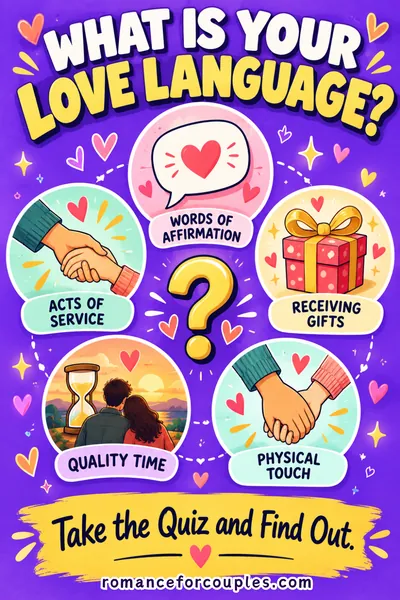
The idea, which has been popular for decades, sorts loving behavior into five broad styles. People often lean toward one or two:
| Love language | How "I love you" sounds or looks | Small way to speak it |
|---|---|---|
| Words of affirmation | Spoken praise, notes, sweet texts | Tell them one specific thing you admired today |
| Quality time | Focused attention with phones away | Take a twenty-minute walk with no errands attached |
| Physical touch | Hand-holding, hugs, a hand on the back | Greet them with a real hug at the door |
| Acts of service | Help that lightens their load | Handle a chore they dread without being asked |
| Receiving gifts | Thoughtful tokens that say "I thought of you" | Bring home their favorite snack after a hard day |
This explains a lot of quiet misunderstandings. A partner who fixes your car, packs your lunch and refills your coffee may rarely say the words, yet they're saying "I love you" all day long in acts of service. Meanwhile, a partner who craves words might feel unloved because nobody's speaking their language.
If you're not sure which styles fit the two of you, our free love language quiz takes a few minutes and gives each of you a clear picture to compare. It's a fun conversation starter, and the results often explain old arguments in a new light. You can also read more in our full guide to love languages.
Try saying: "I realized you show love by doing things for me, and I've been waiting for words. Can we talk about how each of us likes to feel loved?"
When is the right time to say "I love you"?
The right time is when you genuinely feel it and can say it without needing a specific answer back. There's no correct number of dates or weeks.
Some people feel it within a month. Others take most of a year. What matters more than timing is readiness. Ask yourself these questions before you say it the first time:
- Do I know this person beyond the highlights? Have you seen them tired, disappointed or in a disagreement?
- Am I saying it to give, or to get? If you'd feel crushed by anything other than an instant "I love you too," you may want to wait until you can offer it freely.
- Does it match how I treat them? The words land best when they summarize what you've already been showing.
- Is the setting kind? A calm, private moment usually works better than a crowded party or the middle of an argument.
Good moments for a first "I love you"
- A quiet walk or drive. Side-by-side settings feel less intense than face-to-face ones, which can ease nerves for both of you.
- After a shared laugh. When you're both relaxed and happy, the words feel like part of the good mood.
- At the end of a meaningful day. Helping each other through something real, like a move or a family event, makes the declaration feel earned.
Moments to avoid
- Mid-argument. It can feel like a tactic to end the fight.
- Right before a long separation. It can put pressure on the other person to answer before a goodbye.
- In front of an audience. Public declarations make a sincere "I'm not there yet" almost impossible.
Want more ways to express the feeling without the exact three words? Our list of ways to say I love you has gentle alternatives for every stage.
How to respond when someone says "I love you" and you're not ready
Be honest and warm. You can thank them, tell them what you do feel, and explain that you want to say those words only when they're fully true for you.
The worst responses are silence, a joke that brushes it off, or saying it back just to avoid an awkward moment. Each of those can hurt more later. A sincere, kind reply protects trust, which is worth more than a smooth moment.
Try saying: "That means so much to me. I really care about you, and I want to say those words when I'm completely sure, because you deserve the real thing."
Try saying: "I'm so happy you told me. I'm not there yet, but I'm happy where we're heading and I don't want you to take my pause as a no."
Try saying: "Thank you for trusting me with that. I feel a lot for you too. Can I tell you what I'm feeling right now, honestly?"
What to do after the moment
- Follow up within a day or two. A short message like "I've been thinking about what you said, and I still feel so lucky" shows you didn't dismiss them.
- Keep showing affection. Your actions can reassure them that "not yet" doesn't mean "not interested."
- Reflect privately. Ask yourself if you're slow to say it in general, or whether something specific is holding you back.
- Don't drag it out forever. If months pass and you know you won't get there, kindness means being clear about it.
If you said it first and didn't hear it back
It stings. Give yourself a moment to feel it. Then look at the whole picture: are they still showing up, still warm, still making plans? Many people need more time than their partner, and that says more about their style than about your worth.
Try saying: "I meant what I said, and there's no rush. I'd rather wait for your real answer than hear something you don't feel yet."
Real-life situations: what "I love you" means in context
Context changes everything. Here's how the words often read in common situations, with ideas for how to respond.
After a fight
An "I love you" after conflict usually means "We're okay at the core, even though we disagreed." It works best alongside a real repair, such as an apology or a plan to revisit the issue calmly. If it replaces the repair, the problem tends to come back.
Try saying: "I love you, and I also want to finish this conversation properly tomorrow when we're both calmer."
In a long-distance relationship
Across miles, the words carry extra weight because there's less physical presence to back them up. They often mean "You're still my person, even though I can't hug you." Couples apart do best when they add specific actions: scheduled calls, shared plans for the next visit, and small surprises in the mail.
From busy parents
A tired "love you" between school pickup and dinner might sound rushed, yet it often means "We're a team and I'm grateful you're in this with me." Try slowing it down once a day: eye contact, a full sentence, and a moment of appreciation.
When it only comes out late at night
Sleepy declarations tend to be honest, because people's guards are down. Still, notice whether daytime behavior matches. If the warmth disappears by morning, it may be worth a gentle chat.
After years of not saying it
Some couples drift into a pattern where the words fade. Saying it again can feel oddly vulnerable. Start small, with a note, a text or a moment at bedtime. The awkwardness passes quickly, and the closeness usually lasts.
When they say it to everyone
Some people say "love you" freely to friends, coworkers and family. If your partner is one of them, the phrase itself may feel less special. Look for the extras that are only for you: focused time, inside jokes, and plans that put you first.
Common mistakes people make with "I love you"
Most "I love you" mistakes come from expecting the words to do the work of actions, or from using them under pressure. These are easy to fix once you notice them.
- Using it to end every argument. Love is a reason to work things out, not a replacement for working them out.
- Keeping score. Counting who said it first or most often turns affection into a contest.
- Demanding an echo. Asking "Don't you love me?" after every declaration puts the other person on the spot and drains the moment.
- Saying it on autopilot. A flat "love you" at the door is fine sometimes, but if it's the only version your partner hears, try adding warmth and detail.
- Never saying it at all. Some people assume actions are enough. For a partner who values words, silence can feel like distance.
- Ignoring the actions that don't match. If someone says it often but treats you poorly, trust the pattern of behavior.
- Treating it as a guarantee. Love is a strong foundation, but every couple still needs good communication, shared goals and conflict skills.
How to make your "I love you" mean more
Add a reason, a detail or an action. "I love you" lands deepest when the listener can see exactly what you love and feel it in what you do.
Add the "because"
Specific appreciation makes the words concrete. Compare a quick "love you" with "I love you, and I love how patient you were with my mom tonight." The second version tells your partner they're seen.
Match their love language
Say it in their style as well as yours. For a quality-time partner, pair the words with an evening together. For an acts-of-service partner, pair them with taking over a task. For a words partner, write it down.
Say it at unexpected moments
Bedtime and goodbyes are lovely, but an "I love you" in the middle of grocery shopping or while they're concentrating on a puzzle can feel like a small gift.
Back it with reliability
Nothing amplifies the words like a partner who keeps their promises. Every kept promise makes the next "I love you" more believable.
25 ways to say it with more meaning
- "I love you, and I'm proud of how you handled today."
- "I love you more than the last slice of pizza, and that's saying something."
- "I love that you're the first person I want to tell good news to."
- "I love you for the way you make ordinary evenings feel like home."
- "I love you, even when you steal the blanket."
- "I love how safe I feel telling you the messy stuff."
- "I love you and I'm not going anywhere."
- "I love the way you laugh at your own jokes before the punch line."
- "I love you, and I noticed how hard you've been working."
- "I love you on your tired days just as much as your best ones."
- "I love that you still surprise me after all this time."
- "I love you, and thank you for listening tonight."
- "I love you, and I love who I am with you."
- "I love that we can sit in silence and it still feels close."
- "I love you, and I'm grateful you chose me back."
- "I love the way you take care of people without making a fuss."
- "I love you, and I like you, which is a pretty great combination."
- "I love you, and I'm sorry I was short with you earlier."
- "I love how you remember the tiny things about me."
- "I love you, and I can't wait for our next adventure."
- "I love that you make me want to be kinder."
- "I love you, and I'll handle dinner tonight."
- "I love the life we're building, one slow Sunday at a time."
- "I love you, and I trust you completely."
- "I love you, even across all these miles."
Love questions to ask your partner about what "I love you" means to them
The quickest way to understand what "I love you" means to your partner is to ask. These questions open honest, low-pressure conversations.
- "When do you feel most loved by me?" Their answer shows you their love language in action.
- "What did love look like in your family growing up?" Early examples shape how people say and hear the words.
- "Is there anything I do that feels loving but I might not realize?" You may discover small habits worth keeping.
- "How do you like to hear 'I love you,' spoken, written or shown?" This saves a lot of guesswork.
- "What makes you doubt it, if anything?" A brave question, but one that can reveal hidden worries before they grow.
- "What's one thing that would make you feel more appreciated this month?" It turns the conversation into a plan.
- "When did you first know you loved me?" A sweet trip down memory lane that almost always brings a smile.
- "What does a loving disagreement look like to you?" It helps you both handle conflict with care.
For more prompts that help couples open up, try our questions to get to know someone, many of which work just as well for partners who've been together for years.
Try saying: "I'd love to understand what 'I love you' means to you. Could we each answer a couple of questions over dinner this week?"
Troubleshooting: when "I love you" feels confusing
Most confusion around these words comes from mismatched timing, mismatched styles, or behavior that doesn't line up. Here are common puzzles and practical next steps.
| Situation | What might be going on | What to try |
|---|---|---|
| They say it often but rarely make time for you | Words are their main love language, or they're stretched thin | Ask directly for one protected evening a week |
| They never say it but do a lot for you | They show love through actions | Tell them how much hearing it would mean, then appreciate their efforts too |
| It feels automatic lately | Routine has replaced intention | Add a specific reason each time for a week |
| You said it and they went quiet | They may need more time, or felt caught off guard | Give space, then check in gently a few days later |
| They only say it after you're upset | It may be a way to calm things down quickly | Ask to talk through the issue first, then share affection |
| You're not sure you still feel it | Stress, distance or unresolved hurt may be in the way | Reflect privately, then talk honestly, possibly with a licensed counselor |
Clear, kind talk solves a lot of this. Our guide to communication in relationships has step-by-step ways to raise tender topics without starting a fight. And if old hurts are making the words hard to believe, our article on trust in a relationship covers how couples rebuild that footing.
A seven-day "I love you" refresh for couples
If the words have started to feel flat, a one-week refresh can bring the meaning back. Each day takes about ten minutes.
- Day 1: Say it with a reason. Every time you say "I love you," attach one specific thing you appreciate.
- Day 2: Write it. Leave a short handwritten note in a coat pocket, on the mirror or in a lunch bag.
- Day 3: Show it in their love language. Pick one action that fits how your partner most likes to receive love.
- Day 4: Ask one question. Use one of the love questions above and listen without fixing.
- Day 5: Give undivided attention. Spend twenty minutes of quality time together with both phones in another room.
- Day 6: Say thank you for something small. Appreciation for ordinary effort often means more than a grand gesture.
- Day 7: Reflect together. Share which day felt best and decide which habit you'll keep.
Couples who try this often find the words feel new again, not because anything dramatic changed, but because they started paying closer attention to each other.
Frequently asked questions
Can you love someone and still not be ready to say it?
Yes. Many people feel deep affection long before they're comfortable naming it. Past heartbreak, family habits or simple caution can slow the words down. Feeling it and saying it are two separate steps, and it's okay if they arrive at different times. What matters is being honest with your partner about where you are, so the pause doesn't get mistaken for a lack of interest.
What does it mean if a guy says "I love you" first?
It usually means he feels strongly and wants you to know where he stands. Some men say it early because they're confident in their feelings, while others wait until they're sure. Read it alongside his behavior. If he's consistent, respectful and making real plans with you, the words likely carry genuine commitment rather than a passing rush of emotion.
Is it bad to say "I love you" too early?
Not necessarily. Saying it early is only a problem when it comes with pressure, such as expecting an instant reply or using it to speed up commitment. If you say it gently and give the other person room to respond in their own time, an early declaration can feel brave and sweet rather than rushed.
Why does my partner say "love you" instead of "I love you"?
For many people, "love you" is simply a relaxed, everyday version of the full phrase. It often shows up in routines like phone goodbyes. It doesn't automatically mean less feeling. If the shorter version leaves you wanting more, tell your partner kindly that hearing the full words now and then really warms your heart.
How often should couples say "I love you"?
There's no ideal number. Some couples say it many times a day, while others save it for special moments. The healthiest rhythm is one where both partners feel loved and nobody feels the words have gone stale. Try asking each other whether the current frequency feels right, and adjust together.
Can "I love you" fix a relationship that's struggling?
The words alone rarely fix deeper problems, but they can open the door to repair. Struggling couples usually need honest communication, rebuilt trust and changed habits. Pairing your "I love you" with a real willingness to listen and work on things gives it far more power. A licensed counselor can help when you feel stuck.
"I love you" will never be just three words when you say them with care. They're a summary of every kept promise, every patient morning and every small act of kindness. Keep saying them, keep backing them up, and keep learning how your partner hears love best. Taking our love language quiz together is a sweet, easy way to start that conversation tonight.