Most people can spot an unhappy relationship from across the room. The signs of a healthy relationship are quieter and easier to miss, because they live in ordinary moments: the way a couple talks about a bad day, how they disagree about the dishes, whether they still laugh at each other's jokes, and what happens after an argument ends. Healthy love is rarely dramatic. It is steady, kind and a little bit boring in the best possible way.
This guide walks through 25 healthy relationship signs, grouped into six areas that matter most: communication, trust, handling conflict, fun and friendship, affection and closeness, and a shared future. You will not find a perfect couple who ticks every box every day, and that is not the point. Use the list to notice what is already working, and to spot one or two areas you would like to grow. If you want a more structured look, our free Relationship Health Quiz covers the same six areas and gives you a score for each one, along with practical tips.
What makes a healthy relationship?
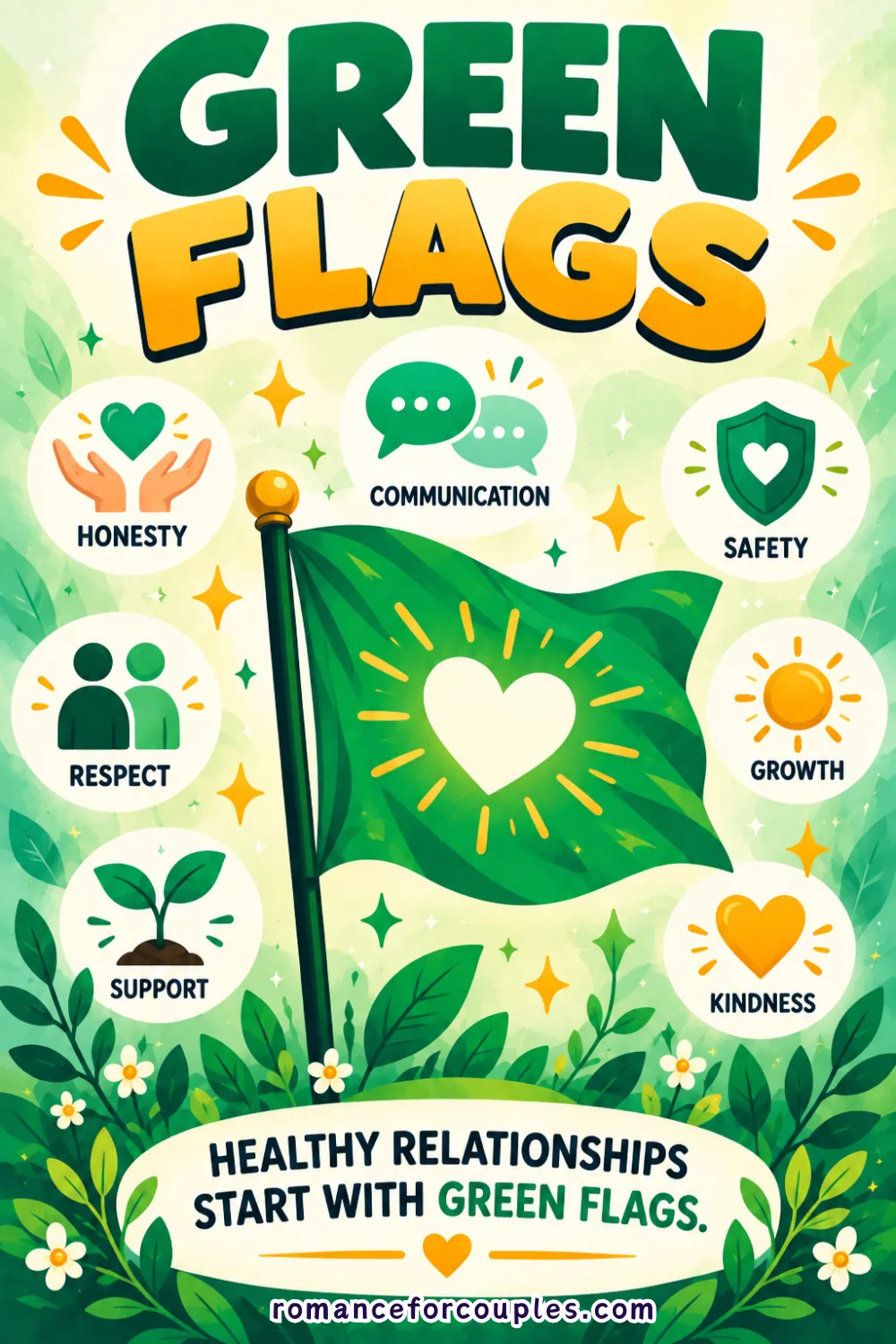
There is no single recipe, but when relationship researchers and counselors describe healthy couples, the same traits keep coming up. Partners feel safe with each other. They can be honest without fear. They treat each other as friends, not opponents. They handle disagreements in a way that leaves both people feeling respected, and they keep choosing each other when life gets busy or hard.
Psychologist John Gottman, who spent decades observing couples, found that the happiest pairs are not the ones who never fight. They are the ones who stay warm and respectful while they fight, who repair quickly afterward, and who keep up a steady stream of small, positive moments the rest of the time. That idea runs through every sign below.
Here is a quick way to see the difference between healthy relationship traits and the patterns that wear couples down:
| Area | Healthy | Unhealthy |
|---|---|---|
| Communication | Honest, direct and kind | Hinting, guessing, sulking or shouting |
| Trust | Freedom, reliability, no need to check up | Suspicion, snooping, broken promises |
| Conflict | Focused on the problem, followed by repair | Personal attacks, contempt, silent treatment |
| Friendship | Laughter, shared interests, real interest in each other | Living like roommates, little curiosity |
| Affection | Warmth, touch and appreciation given freely | Affection used as a reward or withheld as punishment |
| Future | Shared plans and room for each person's dreams | Avoiding the future, or one person deciding for both |
Communication: signs 1 to 5
Good communication is not about talking a lot. It is about both people feeling heard.
1. You can say how you feel without rehearsing it
In a healthy relationship, you do not need to plan your words for hours or wait for the perfect moment to mention that something bothered you. You can say, "That comment stung a bit," and trust that it will be taken seriously rather than turned into a fight. Honesty feels possible because it has been met with care before.
2. You actually listen to each other
Listening means more than waiting for your turn to talk. Healthy couples put the phone down, ask follow-up questions and try to understand before they try to fix. When one of you is venting, the other can tell whether the moment calls for advice or simply for a hug and a "that sounds exhausting."
3. You turn toward each other's small bids for connection
Gottman called the little invitations partners make throughout the day "bids": a comment about something in the news, a sigh, a "look at this," a hand on the shoulder. Happy couples tend to respond to these bids, even briefly, instead of ignoring them. Each small response says, "I noticed you." Over time, those tiny moments add up to a deep sense of being seen.
4. You ask for what you need instead of expecting mind reading
Nobody can read minds, and healthy partners do not expect each other to. Rather than hoping your partner will notice you need a quiet evening, you say, "I'm wiped out. Could we stay in tonight?" Clear, kind requests are much easier to meet than silent expectations that lead to disappointment.
5. You can talk about the hard stuff
Money, family, intimacy, health, the future: every couple has topics that feel awkward. In a healthy relationship, those subjects are not off-limits. The conversations may be uncomfortable, but they happen, and they usually end with both people understanding each other a little better. A good habit is to raise these topics when you are both calm and rested, not in the middle of an argument or late at night.
Trust and respect: signs 6 to 10
Trust is the floor a relationship stands on. Respect is how you treat each other while standing there.
6. You feel safe, not watched
You do not check each other's phones, track each other's locations out of suspicion, or demand a full report of every conversation. You might share passwords or locations for convenience, but it comes from openness, not control. Each of you trusts that the other is being honest, and that trust has been earned over time. For a deeper look at building it, see our guide to trust in a relationship.
7. You keep your word
Healthy partners do what they say they will do. If you promise to pick up groceries, call at lunch or be home by seven, you follow through, and if something changes, you let your partner know. Reliability in small things is what makes trust in big things possible.
8. You respect each other's boundaries
Each of you can say no, ask for space, or set limits without being punished for it. Maybe one of you needs an hour alone after work, or does not want certain things shared with family. In a healthy relationship, those limits are respected rather than argued away. Our article on boundaries in a relationship explains how to talk about them kindly.
9. You both keep your own friends and interests
A healthy relationship adds to your life rather than replacing it. You still see your friends, keep your hobbies and spend time with family, and your partner encourages it. Neither of you feels guilty for having a life outside the relationship, and you both bring fresh stories and energy back home.
10. You speak well of each other, even when apart
When your partner is not in the room, you do not mock them to friends or complain about them to anyone who will listen. You might ask a trusted friend for advice now and then, but the general tone is loyal and affectionate. Respect that holds up in private is one of the clearest signs of a healthy relationship.
Handling conflict: signs 11 to 14
Every couple argues. What matters is how.
11. You fight about the problem, not about each other
Healthy disagreements stay focused on the issue at hand, like the budget, the in-laws or the unwashed pans, rather than turning into attacks on character. "I felt let down when the plans changed last minute" is very different from "You always ruin everything." Gottman described four patterns that predict trouble: criticism, contempt, defensiveness and stonewalling. Healthy couples slip into them occasionally but notice and pull back.
12. You make repairs, and accept them
A repair attempt is anything that lowers the tension during or after a disagreement: a joke, a touch, an apology, a "can we start over?" In healthy relationships, partners make these attempts often, and just as importantly, the other person accepts them. Being able to soften the mood mid-argument is one of the strongest signs a couple will be okay.
13. You can take a break without walking away for good
Sometimes emotions run so high that nobody can think clearly. Healthy couples learn to call a time-out, calm down separately and come back to the conversation later. The key difference from stonewalling is that you say you are taking a break and you return when you said you would.
14. Arguments end, and they stay ended
Once an issue is talked through, you do not drag it into every future disagreement as ammunition. You forgive, and you let it rest. Some problems never get fully solved, since every couple has a few ongoing differences, but healthy partners learn to talk about those with humor and patience instead of reopening old wounds.
Fun and friendship: signs 15 to 18
The couples who last tend to be good friends first.
15. You still laugh together
Shared humor is a powerful glue. You have inside jokes, silly nicknames and running gags that nobody else would understand. Laughter helps couples get through stressful seasons, and it keeps the relationship feeling light even when life is heavy.
16. You are curious about each other
Even after years together, you still want to know what your partner thinks, what they are worried about and what they are excited for. People change, and healthy couples keep up with those changes by asking questions rather than assuming they already know every answer.
17. You enjoy doing ordinary things together
Running errands, cooking dinner or walking the dog can be genuinely pleasant when you do it together. You do not need a big event to have a good time. Some of the best moments in a healthy relationship happen in the grocery store or on the couch on a Tuesday night.
18. You cheer for each other's wins
When your partner gets good news, you are genuinely happy for them, not competitive or dismissive. You celebrate promotions, finished projects and small personal victories. Being each other's biggest fan is one of the simplest and most meaningful things partners can do.
Affection and closeness: signs 19 to 22
Closeness is built through warmth that shows up every day, not only on special occasions.
19. Affection flows freely
Hugs, kisses, holding hands, a hand on the back as you pass in the kitchen: healthy couples stay physically affectionate in ways that feel good to both people. The amount varies from couple to couple, and that is fine. What matters is that affection is offered freely, never demanded and never used as a bargaining chip.
20. You say thank you for the small stuff
You notice when your partner makes the coffee, takes out the trash or handles a tricky phone call, and you say so. Appreciation keeps partners from feeling taken for granted, and it creates a habit of looking for what is going right instead of what is going wrong.
21. You know how your partner likes to be loved
Some people feel most loved through kind words, some through time together, some through touch, gifts or help with everyday tasks. Healthy partners learn each other's preferences and make an effort to speak that language, even when it is not their own natural style. The Love Language Quiz can help you both figure this out.
22. You feel comfortable being yourself
You do not have to perform or hide parts of yourself. You can be tired, grumpy, silly or sad and still feel accepted. Being truly known, and loved anyway, is one of the deepest forms of closeness there is.
A shared future: signs 23 to 25
Healthy couples look ahead together, while leaving room for each person to grow.
23. You make decisions as a team
Big choices, like where to live, how to handle money or whether to take a new job, are discussed together. Neither partner makes major decisions alone and presents them as done deals. Both voices matter, even when you end up compromising.
24. You support each other's personal dreams
You want your partner to grow, whether that means going back to school, starting a side project or training for a race. Their goals are not a threat to the relationship; they are part of what makes the relationship rich. You make practical room for each other's dreams, not just encouraging words.
25. You can picture the future and you like what you see
When you imagine the years ahead, your partner is in the picture, and the thought feels good rather than heavy. You talk about things you would like to do together, big and small, and you feel like you are building something side by side. If you want ideas for what to build, our guide to relationship goals has 40 real ones.
What a healthy relationship is not
Sometimes it helps to name what healthy love does not look like, because a lot of popular ideas about romance get it wrong.
- It is not constant happiness. Every couple goes through dull stretches, stressful seasons and times when they feel less connected. Those phases are normal.
- It is not the absence of conflict. Couples who never disagree are often avoiding important conversations.
- It is not spending every moment together. Time apart is healthy and keeps both people whole.
- It is not jealousy as proof of love. Intense jealousy is usually a sign of insecurity, not devotion.
- It is not one person doing all the work. Effort, apologies and compromise go in both directions, even if not always in equal amounts on any given day.
Healthy relationship signs at different stages
In a new relationship
Early on, look for consistency. Does the person do what they say? Do they respect a "no" the first time? Are they curious about your life, and do they introduce you to people who matter to them? Healthy early relationships move at a pace that feels comfortable to both people, without pressure.
In a long-term relationship
After years together, the signs look different. Look for whether you still turn toward each other, still show appreciation, and still make time for fun. Long-term couples who keep their friendship alive tend to weather the inevitable storms much better.
During a hard season
Illness, grief, job loss, a new baby or caring for a parent can strain any couple. In a healthy relationship, stress may cause short tempers and distance, but underneath, you still feel like a team facing the problem together rather than blaming each other for it.
How to build more of these signs
If you read this list and noticed a few gaps, you are in good company. Almost every couple has areas that could use some care. A few simple places to start:
- Pick one sign to work on. Trying to fix everything at once rarely works. Choose one small habit, like saying thank you more often, and practice it for a month.
- Talk about it together. Share this list and ask which signs feel strongest to each of you, and which feel weakest. Answers are often surprising.
- Schedule time to connect. A weekly check-in or a regular date night keeps small issues from growing.
- Take the quiz separately, then compare. Our Relationship Health Quiz gives each of you a score in six areas. Looking at your results side by side can start a helpful conversation.
- Ask for help early. A couples counselor is not only for relationships in crisis. Many couples find a few sessions useful for learning better ways to communicate before problems become entrenched.
When to get support
If you and your partner keep having the same painful arguments, feel distant for long stretches, or struggle to talk without it turning hurtful, a licensed couples counselor or therapist can help. Needing support is not a failure; it is a sign that you care enough to invest in the relationship.
Some patterns are not about communication at all. If you feel afraid of your partner, if they control where you go, who you see or what you spend, if they threaten you, or if they hurt you in any way, that is a safety issue, not a relationship rough patch. You deserve support. In the US, you can reach the National Domestic Violence Hotline at 1-800-799-7233 or at thehotline.org. Elsewhere, please contact your local support services or emergency services.
Frequently asked questions
What are the most important signs of a healthy relationship?
Feeling safe to be honest, trusting each other, handling conflict respectfully, enjoying each other's company, showing affection freely and making decisions as a team are among the clearest signs of a healthy relationship.
What makes a healthy relationship last?
Lasting couples tend to keep their friendship alive, respond to each other's small bids for attention, repair quickly after disagreements, show appreciation often and keep growing both together and as individuals.
Is it normal to argue in a healthy relationship?
Yes. Disagreements are normal and even useful. The difference is that healthy couples argue about the problem rather than attacking each other, and they make up afterward.
What are healthy relationship traits in a partner?
Look for reliability, kindness, honesty, respect for your boundaries, the ability to apologize, genuine interest in your life and support for your friendships and goals.
Can a relationship be healthy if we have different interests?
Absolutely. Separate interests keep each person whole and give you new things to share. What matters is respect for each other's interests and some shared time you both enjoy.
How do I know if my relationship is unhealthy?
Ongoing criticism, contempt, dishonesty, jealousy that feels controlling, feeling unable to be yourself, or feeling afraid of your partner are warning signs. Fear, control or threats are a safety issue, and support is available.
Can an unhealthy relationship become healthy?
Many can, when both partners are willing to change and put in the effort, often with help from a couples counselor. Relationships involving fear, control or harm are different, and safety comes first.
Curious how your relationship measures up across all six areas? Take the free Relationship Health Quiz for a score in each area and practical tips you can try this week.